Inflatable tubes are basically sealed, flexible structures that trap air, giving us buoyancy, cushioning, support, or even helping controlled movements. You’ve probably seen them in quite a few places—inside bike tires, under watercraft, in rescue gear, or even in temporary industrial setups. At first glance, they seem pretty simple in shape, right? But their actual performance isn’t just about how they look; it depends a lot on the materials used, the quality of the seams, how thick the walls are, how much air pressure is inside, and the environment they’re used in.
To give you a more expert opinion (though just a quick note—this isn't from a real person, just a composite idea), think of it like this: “A tube’s reliability totally depends on whether its material and build match what it’s meant for.” That’s why a float for fun, a bike inner tube, and an industrial air conduit can’t just be swapped out for each other—they all face different kinds of stress. Suns, water, rough surfaces, repeated flexing, pressure shifts—they’re all different challenges. And honestly, tiny details matter a lot. A weak seam can become a weak spot that causes a leak, and using the wrong material can make the tube age badly, especially outdoors. So, it’s smart to look at manufacturer specs, follow inspection guidelines, and think about the actual environment where the tube will be used.
In this guide, I’ll walk you through what inflatable tubes are, how they work, and where they’re commonly used. We’ll talk about the typical materials, key design features, benefits, and limitations too. And while the word “inflatable” might make it seem like these tubes just work perfectly without any fuss, that’s not quite the full story. They actually need proper care, correct inflation, and regular checks for wear and tear. Getting a handle on these basics makes it easier to compare different products and spot when a tube isn’t quite right for your needs.
What Inflatable Tubes Are and How They Function
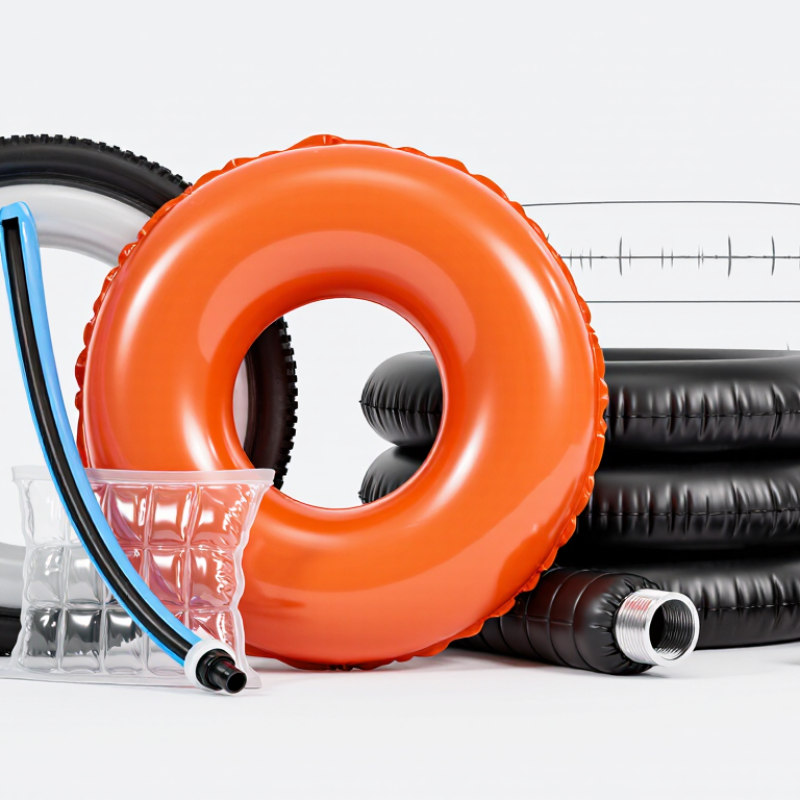
Inflatable tubes are flexible, hollow structures that take shape when filled with air. They are commonly made from coated fabric, rubber, or durable plastic, with seams designed to contain pressure.
Air gives shape.
As the tube inflates, pressure pushes against its walls and makes the structure firm enough for its intended job. A valve controls airflow, allowing the tube to be filled, adjusted, and deflated.
Different designs serve different purposes. A ring-shaped tube can provide buoyancy on water, while a long, narrow tube may cushion equipment or help support a lightweight structure.
Some models have several air chambers, so one puncture may not empty the entire tube. Still, performance depends on material, construction, pressure, and the load placed on it.
A tube can feel sturdy on land yet behave differently when wet or unevenly loaded.
Tips:
Inflate gradually and follow the maker’s pressure guidance. Check seams, valves, and the surface before use.
Small leaks matter. Avoid sharp edges and prolonged heat, which can weaken materials.
If the tube softens, stop and inspect it rather than assuming it only needs more air; I sometimes overlook how quickly temperature changes can affect pressure.
Key Components and Materials Used in Inflatable Tubes
An inflatable tube is more than an air-filled shell.
Its performance depends on the fabric, coating, seams, valve, and shape working together. The base textile is often woven polyester or nylon, selected for strength and manageable weight. A rubber or thermoplastic coating helps reduce air loss and resist moisture. PVC-coated fabrics are common in general-purpose designs, while polyurethane coatings may offer flexibility and abrasion resistance. No material is perfect. Cold, sunlight, and repeated folding can change how a material behaves.
Seams are critical weak points. Depending on construction, they may be heat-welded, radio-frequency welded, or stitched and sealed. A sound joint needs compatible materials and even processing; a rough edge or tiny gap can become a leak. The valve allows inflation and deflation, while its gasket and cap help retain pressure. Small parts matter. Internal baffles, when present, reduce shifting and help the tube keep its shape under load. On a wet dock, a pinhole near a seam can be hard to spot, so inspect the surface and listen for escaping air. A specification sheet cannot reveal every workmanship flaw. Match material thickness and coating to abrasion, sun exposure, temperature, and expected load; capacity alone does not tell the whole story.
Common Shapes and Types of Inflatable Tubes
Inflatable tubes commonly use cylindrical, ring-shaped, and pillow-like forms. Cylinders create long supports or protective air beams. Rings provide buoyancy around a person or object. Pillow-shaped tubes cushion cargo inside boxes and shipping cases. Some designs use connected chambers, so one puncture does not immediately empty the entire tube. Handy, but not invulnerable.
Shape affects how a tube behaves. A long, narrow tube fits along a frame, while a broad pillow spreads pressure across a surface. Ring tubes need balanced inflation to stay stable in water. Materials, seams, valves, and intended pressure matter just as much as shape. The categories can overlap, which makes product labels less useful than dimensions and load ratings. Check the manufacturer’s specifications before use, and inspect seams and valves regularly.
The MarketsandMarkets report Inflatable Packaging Market estimated that sector at $2.1 billion in 2022 and projected $2.8 billion by 2027. Those figures cover inflatable packaging, not every kind of tube. Still, they show why cushioning tubes and air-filled protective forms are commercially important. For packaging, choose a tube that fills the void without crushing the item. Too much air can be a problem. A little trial fitting may be needed.
Common Inflatable Tube Shapes and Their Uses
How to read this chart: The bars show theoretical buoyant force for each shape when fully submerged with the same 10-liter displaced volume. Buoyant force depends on displaced water volume and water density—not the tube’s shape. Values are calculated using 1,000 kg/m³ for fresh water, 1,025 kg/m³ for seawater, and gravitational acceleration of 9.81 m/s².
-
Ring: commonly used for recreational flotation and life rings.
-
Straight tube: used in floats, bumpers, and floating barriers.
-
U-shaped tube: used in body-support floats and flotation aids.
-
Pillow-shaped tube: used in compact floats, cushions, and buoyancy chambers.
These are common examples, not product specifications. Actual performance depends on dimensions, construction, load, and how much of the tube is submerged.
How Inflatable Tubes Are Inflated and Sealed
What Are Inflatable Tubes and What Are They Used For?
Inflatable tubes are flexible chambers that support, cushion, float, or carry air. Their seams and valves determine how well they hold pressure. Many are made from coated fabric or thermoplastic film. To inflate one, connect a pump nozzle to its valve and add air gradually. A one-way valve helps prevent air escaping when the nozzle is removed; a cap or plug adds another barrier. Don’t force the valve. A poor fit can damage it.
The tube’s ends and seams are commonly closed by heat sealing, which presses compatible plastic layers together under controlled heat and pressure. Some coated materials use radio-frequency welding. Either way, the seal needs consistent contact; wrinkles or dust can create tiny leak paths. PlasticsEurope’s Plastics—The Fast Facts 2024 reports 413.8 million tonnes of plastics produced worldwide in 2023. That figure describes the broad materials industry, not inflatable-tube output, so it cannot predict a tube’s durability. Check the product’s stated pressure limit, inflate in short bursts, and inspect seams with soapy water for growing bubbles. Small leaks matter. I’ve found that a quick visual check can miss them, so a pressure check after inflation is more useful.
Practical Uses Across Recreation, Industry, and Transport
Inflatable tubes are sealed, air-filled chambers that provide buoyancy, cushioning, or support. In recreation, they appear as river floats, pool rings, and inner tubes for some watercraft. A river tube can drift comfortably over calm water, but current, rocks, and cold conditions change the risks quickly. Check for leaks and damage before use, and choose a suitable flotation aid for the setting. Not just a toy.
In industry, purpose-built inflatable tubes can cushion fragile equipment during handling or serve as temporary plugs inside pipes. These applications demand more care than a casual visual check. Workers need to follow the tube’s pressure rating and installation instructions; an improperly secured plug can move suddenly. A small crease or worn valve may matter. Details count.
Transport uses include inner tubes in bicycles, handcarts, and some other wheeled equipment. Air pressure helps support the load and absorb bumps, though the correct tube size and pressure depend on the tire and application. Tubes are also used to protect cargo from vibration during shipping. They are useful, but not foolproof: punctures, heat, and overinflation can undermine performance. Regular inspection is easy to postpone, and that is often the weak point.
Choosing, Inspecting, and Maintaining an Inflatable Tube
An inflatable tube may be a towable water float, a pool ring, or an inner tube for a tire. Choose one designed for the activity, not just one that looks sturdy. Check its stated user limit, dimensions, material, and valve type. Seams should lie flat, with no exposed threads or brittle patches. The U.S. Coast Guard’s 2023 Recreational Boating Statistics report recorded 564 boating deaths; among drowning victims, 75% were not wearing life jackets. A towable tube is not a substitute for one. Small details matter.
Before use, inflate the tube to its specified pressure and inspect it in good light. Listen for hissing, then apply soapy water around the valve and seams; growing bubbles can reveal a leak. Don’t overinflate it in direct sun, because warming air expands. After use, rinse away grit and salt, let the tube dry fully, and store it loosely folded in a cool, shaded place. I sometimes rush the drying step, and that is exactly when damp folds can hide damage. Recheck the valve, seams, and surface before each outing. Replace a tube with deep cuts, separating seams, or recurring leaks rather than trusting a quick patch. Never guess.
Inflatable Round Bar Tables: A Practical Guide to Choosing the Classic Cocktail Table for Events
An inflatable round bar table brings the familiar look of a classic cocktail table to trade shows, outdoor promotions, networking events, and parties. When choosing one, consider where it will be used, how quickly it needs to be set up, and what it must display. Its lightweight, portable design makes it easy to transport and arrange as a bar, reception point, or informal gathering spot, while its modern shape helps create a polished event atmosphere indoors or outside.
For professional settings, an air-sealed model can be a practical choice: it requires no blower during use, keeping the space quiet and free of extra equipment. Check that the tabletop suits your intended materials, such as drinks, brochures, catalogs, or product samples, and choose a finish that fits the event’s look. Custom printing and logo options can add visibility to a display or campaign. Buyers comparing suppliers in China may also want to ask about construction quality, print options, and packing for transport, so the table is ready for repeated event use.
FAQS
Many use woven polyester or nylon with a rubber or thermoplastic coating. PVC and polyurethane coatings are common options. No material handles every condition equally well.
Seams can become weak points if materials or joining methods are poorly matched. Check for rough edges, gaps, or escaping air. Tiny flaws matter.
The valve controls inflation and deflation. Its gasket and cap help retain pressure, so check that both sit firmly in place.
Cylinders can support frames, rings provide buoyancy, and pillow-shaped tubes cushion cargo. A tube’s dimensions often tell you more than its label.
Connected chambers can limit air loss after one chamber is punctured. They are helpful, but the whole tube is not invulnerable.
Look over the surface, seams, and valve. Near a wet dock, a small leak may be hard to spot. Listen for escaping air.
Choose one that fills empty space without pressing too hard against the item. Test the fit; too much air can cause problems.
Sunlight, cold, repeated folding, abrasion, and load can change how materials behave. Match the coating and thickness to expected conditions, though specifications cannot reveal every workmanship flaw.
Conclusion
Inflatable Tubes are hollow structures that expand when filled with air or another suitable gas, creating buoyancy, cushioning, support, or a flexible pathway. Their performance depends on components such as the outer wall, seams, valves, and any internal supports. Common materials include coated fabrics and flexible polymers, selected for their strength, weight, and resistance to wear. Tubes come in a range of shapes and sizes, from simple rings and cylinders to more specialized forms designed for particular tasks.
Inflation methods vary, but typically involve a valve that allows air in and helps keep it contained; seams and closures must also be properly sealed. These tubes are used in recreation, industrial settings, and transport, where they can provide flotation, protection, or temporary structural support. Choosing a suitable tube means considering its intended use, dimensions, material, and operating conditions. Regular inspection for leaks, damage, and weakened seams, along with careful cleaning, drying, and storage, can help maintain its function and extend its useful life.