Leave Your Message
0%

Picking the best inflatable sport dome from China isn’t just about price tags and pretty exterior photos. You’ve really got to dig into material quality, structural design, the manufacturer’s actual experience, installation support, and what it’ll cost to run over the long haul. A dome can look great under showroom lights and still struggle when strong wind, heavy rain, or daily wear and tear hit it.

As Dušan Olaj, founder of DUOL and a seasoned pro in air-supported structures, puts it: “A reliable dome begins with correct engineering, not attractive marketing.” That’s worth paying attention to. It pushes the decision toward measurable things—fabric strength, air pressure stability, emergency backup systems, anchoring methods, and ventilation performance. Ask for technical drawings, lab reports, project references, and maintenance instructions. Real evidence matters.

This guide looks at how to size up Chinese suppliers with practical judgment. We’ll consider production facilities, welding quality, customization options, delivery coordination, and after-sales communication. A serious supplier should be willing to explain weaknesses, not hide them. That’s an easy point to miss.

Buyers should also think about the actual playing environment. Will athletes need natural light, temperature control, acoustic treatment, or specialized flooring? A football dome, tennis dome, and multi-purpose training dome may need different layouts and equipment. The cheapest quote can end up costing more once installation problems show up. I’ve seen that mistake come up again and again in procurement discussions.

The outline below gives you a clearer way to evaluate suppliers. It’ll help readers compare options, verify technical claims, and choose an inflatable sport dome that supports safe, practical, and sustainable sports operations.
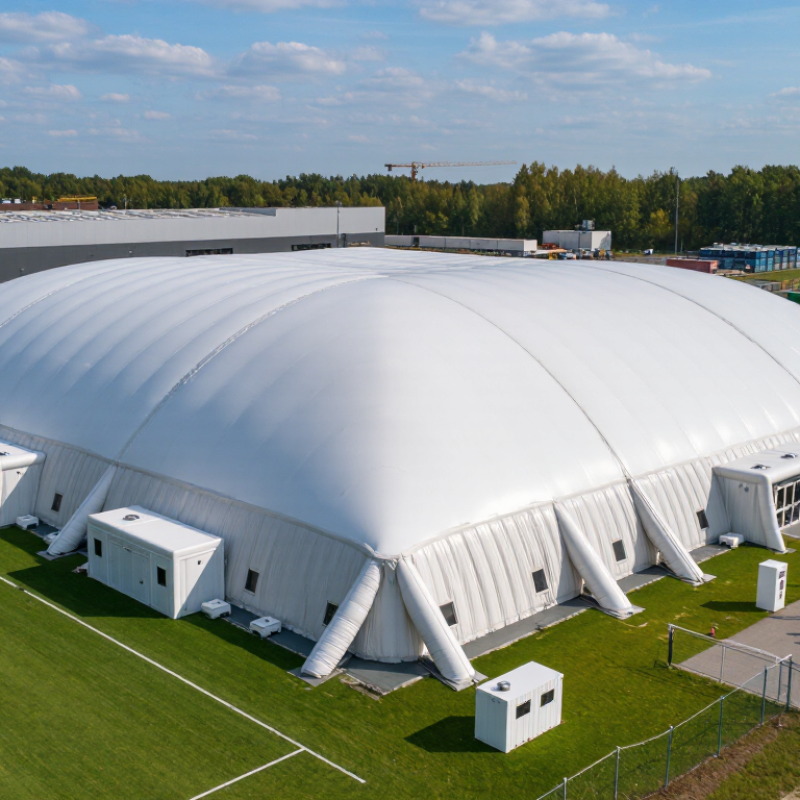
How to Choose the Best Inflatable Sport Dome from China?

Define Your Inflatable Sport Dome’s Purpose and Usage Requirements

How to Choose the Best Inflatable Sport Dome from China?

Define your inflatable sport dome’s purpose before comparing suppliers. A dome for football training needs different clearance than one for tennis or fitness classes. Measure the court, run-off zones, equipment areas, and spectator space. Then consider daily usage. Will children train after school, or will adults use the facility for several hours? Frequent use requires durable fabric, stable air pressure, reliable ventilation, and accessible entrances.

Climate also changes the specification. In windy regions, request tested anchoring methods and clear installation guidance. For hot areas, check ventilation capacity, air circulation, and material resistance. Snowy locations may require a stronger structural design. These details matter more than attractive photos. A planning mistake is choosing the dome size first, then forcing the sport layout inside it.

Tips: Prepare a written usage schedule. Include peak hours, sport types, user numbers, and seasonal weather. Ask the supplier for technical drawings, material specifications, pressure data, maintenance instructions, and project references. Verify whether local permits, fire assessments, drainage plans, or electrical inspections apply. Small omissions become expensive later.

Leave space for maintenance access and emergency movement. Inspectors and installers need room to work safely. Request a sample or fabric test when possible, because online colors can be misleading. Also ask how quickly replacement components can be supplied. The cheapest option may not suit intensive use. A better choice matches your actual schedule, site conditions, and operating experience.

How to Choose the Best Inflatable Sport Dome from China?

Define your dome’s purpose and usage requirements by comparing the official playing-area dimensions of common sports.

The dome should provide enough clear internal space for the selected court, player movement, lighting, ventilation, and safety margins. Larger sports such as futsal require greater span, height, anchoring capacity, and air-inflation performance than badminton or volleyball.

Assess Dome Size, Shape, Layout, and Available Installation Space

Choosing the Best Inflatable Sport Dome from China requires accurate site measurements. Measure length, width, clear height, access roads, drainage, and overhead obstacles. A 30-by-50-meter court may need extra perimeter space for anchoring and maintenance. Do not size the dome only around the playing area. I once underestimated service clearance, making equipment movement awkward. Leave working room around entrances, fans, storage areas, and emergency exits. Ask the manufacturer for a scaled layout, not a sales sketch.

Shape affects both performance and usable space.
A rectangular dome usually supports courts efficiently, while an arched shape can improve airflow and reduce material stress. Curved ends may create unused corners near seating or storage zones. Consider ceiling height above lighting, nets, and elevated sports equipment. Low sections can become frustrating quickly. Request structural drawings, fabric specifications, pressure requirements, and installation tolerances. An experienced technical team should explain these details clearly.

The installation surface deserves equal attention. Concrete, compacted gravel, and prepared asphalt have different anchoring requirements. Check whether the site can support heavy vehicles during delivery. Confirm power access for inflation equipment and backup systems. Local professionals should review foundation conditions, wind exposure, drainage, and occupant movement. My early plans focused too much on dome appearance. Function mattered more. A small layout change can improve circulation, visibility, and daily maintenance. Leave assumptions open to revision.

Compare Materials, Structural Design, and Weather Resistance

How to Choose the Best Inflatable Sport Dome from China?

Material selection affects safety, comfort, maintenance, and service life. PVC-coated polyester is widely used because it balances strength, flexibility, and cost. A heavier fabric is not always better. Coating quality, welding accuracy, and ultraviolet resistance matter more than weight alone. TPU-coated fabric can offer good flexibility and a cleaner surface, but its price and repair requirements may be higher. Ask for tensile strength, tear resistance, flame performance, and UV-aging test records. Do not rely on attractive samples only.

Structural design should match the sports and local climate. Check the clear span, internal air pressure, anchoring method, emergency exits, and backup blowers. A well-designed airlock reduces pressure loss when people enter. Reinforced seams around doors and corners deserve close attention. They often receive the most stress. The dome should also provide enough height for lighting, ventilation, and ball movement. Small design errors can create expensive problems later.

Weather resistance requires more than a strong membrane. Confirm the rated wind speed, snow-load approach, drainage plan, and operating temperature range. In wet regions, raised foundations and reliable gutters help prevent standing water. In cold areas, insulation can reduce heating costs, although it may increase installation complexity. Request third-party inspection records and clear maintenance instructions. Inspectors should examine pressure stability, anchor tension, welds, and blower performance. Some suppliers provide impressive data but limited field evidence. That gap deserves careful questions.

How to Choose the Best Inflatable Sport Dome from China? - Compare Materials, Structural Design, and Weather Resistance

Evaluation Dimension PVC-Coated Polyester TPU-Coated Polyester or Nylon ETFE Film or Cushion System What to Verify Before Purchase
Typical Application Most common option for air-supported sports domes, temporary halls, training facilities, and multipurpose courts. Suitable for lightweight, foldable, portable, or premium flexible structures where low weight and flexibility are priorities. More frequently used for architectural façades, skylights, and lightweight permanent enclosures than for standard fabric sports domes. Confirm whether the proposed material is intended for year-round sports use and the required building occupancy.
Relative Material Cost Low to medium. Usually offers the best balance between price, durability, repairability, and availability. Medium to high. Processing and coating costs are generally higher than standard PVC systems. High. Specialized film, cushion fabrication, edge detailing, and engineering increase total project cost. Compare the complete installed cost, including foundation, air-handling equipment, transport, installation, testing, and maintenance.
Typical Areal Weight Approximately 650–1,200 g/m², depending on fabric strength, coating thickness, insulation, and accessories. Approximately 300–900 g/m² for many flexible coated-fabric constructions. Approximately 150–400 g/m² for film layers; complete cushions are heavier because of multiple layers, air gaps, and edge systems. Request the declared mass per square metre for the complete membrane assembly, not only the base fabric or film.
Tensile Strength Common architectural fabric specifications are roughly 2,500–6,000 N per 5 cm, depending on grade and direction. Common specifications vary widely, approximately 1,500–4,000 N per 5 cm, depending on the textile substrate and coating. ETFE is a high-strength fluoropolymer film; tensile strength is commonly reported in MPa and varies by film thickness and grade. Check test results for both warp and weft directions, seam strength, tear strength, and the design safety factor.
Flexibility and Foldability Good flexibility, although heavier coatings and cold temperatures can make folding more difficult. Very good flexibility and abrasion resistance; often suitable for repeated deployment when properly specified. Good flexibility as a film, but cushions and connection details require careful handling to prevent creasing or puncture. Ask for the minimum folding temperature, recommended packing method, and repair procedure.
UV and Weathering Resistance Good when supplied with UV stabilizers and a suitable surface finish; prolonged exposure can still cause coating aging and color fading. Good to excellent depending on TPU formulation and UV stabilization; the exact grade must be verified. Excellent resistance to ultraviolet radiation and weathering; surface dirt and edge detailing remain important maintenance issues. Request accelerated-aging data, UV-stabilizer information, warranty exclusions, and cleaning recommendations.
Operating Temperature Many products are designed for approximately −30°C to +70°C, but the actual range depends on plasticizer, coating, and reinforcement. Many formulations perform across approximately −40°C to +80°C, although low-temperature flexibility and heat aging vary by grade. ETFE film has a broad temperature capability, commonly cited from approximately −80°C to +150°C; the complete system may have lower limits. Match the material rating to the local climate, storage conditions, snow-melt strategy, and indoor heating or cooling system.
Waterproofing and Humidity Generally waterproof when seams, zippers, penetrations, and repairs are correctly sealed. Good waterproofing potential; seam welding and coating compatibility are critical. The film itself is highly water-resistant, but cushion edges, seals, and condensation control require specialist design. Check hydrostatic-pressure testing, seam details, drainage, condensation management, and water-ingress warranty terms.
Recommended Structural Design Air-supported single membrane for economical projects; double membrane or insulated liner for year-round sports use. Lightweight single membrane or modular tensioned system; suitable where portability and compact storage matter. Usually a multi-layer cushion or engineered panel system with carefully designed perimeter restraints. Require structural calculations for membrane stress, anchorage, cable layout, door openings, and equipment loads.
Air Pressure and Equipment Air-supported domes commonly operate at low positive pressure; the exact set point is determined by geometry, openings, and local wind design. May require lower total system weight, but pressure requirements still depend on the complete structure. Cushion systems typically use controlled cavity pressure and monitoring equipment rather than relying on one large occupied-space air volume. Confirm fan redundancy, emergency power, pressure alarms, access-door airlocks, and measured air-leakage performance.
Wind Resistance Can provide strong wind performance when correctly anchored and pressurized; resistance is not determined by fabric alone. Light weight can increase sensitivity to uplift unless anchorage and pressure control are properly engineered. Can be engineered for demanding conditions, but perimeter framing, cable systems, and panel connections are decisive. Request site-specific wind calculations based on local code, exposure category, building height, and terrain.
Snow and Rain Performance Suitable for snow regions only with adequate curvature, heating, pressure, drainage, and a defined snow-removal plan. Requires careful snow-load engineering because lightweight membranes may have lower reserve capacity. Can support reliable year-round performance when designed with proper geometry, drainage, and load-bearing connections. Do not accept a generic snow-load claim; verify the design snow load, drifting conditions, heating capacity, and emergency procedures.
Fire Performance Fire behavior varies substantially by coating and treatment; flame-retardant grades are commonly available. Fire performance depends on polymer formulation, backing textile, and additives; certification is essential. ETFE generally melts and retracts away from a flame rather than behaving like conventional fabric, but the entire assembly must be assessed. Specify the fire classification required by the destination country and obtain reports for the exact membrane and assembly.
Thermal Insulation Single-layer fabric has limited insulation; double membranes with an air gap can significantly improve comfort and energy efficiency. Usually limited in single-layer form; can be combined with liners or multilayer assemblies. Air cushions can provide useful thermal separation, while transparent films may increase solar heat gain without shading. Request the calculated U-value, solar heat-gain data, insulation layout, ventilation design, and energy model assumptions.
Repair and Maintenance Generally easy to patch or weld; routine inspection should focus on seams, anchor points, doors, and high-abrasion areas. Repair is possible, but compatible welding equipment and trained technicians may be required. Small punctures may be repairable, but damaged cushions, edge seals, and specialty panels can be more difficult and costly to replace. Confirm spare-material availability, repair-kit contents, response time, inspection intervals, and technician training.
Best Overall Choice Best value for most sports domes: a properly engineered PVC-coated polyester double-membrane system with redundant blowers and certified fire performance. Best for portability: TPU-coated fabric where low weight, flexibility, repeated deployment, and premium abrasion performance justify the additional cost. Best for premium architectural projects: ETFE systems where daylight, long-term UV resistance, and a lightweight appearance are more important than low initial cost. Select the solution by local climate, operating schedule, sports requirements, code compliance, lifecycle cost, and after-sales support—not by material price alone.

Note: Performance ranges are indicative industry values. Final specifications must be confirmed through project-specific structural calculations, material test reports, fire certificates, and local building-code compliance documents.

Evaluate Safety Systems, Inflation Equipment, and Emergency Protection

Choosing the Best Inflatable Sport Dome from China

A reliable inflatable sport dome begins with its safety systems, not its appearance. During a site inspection, check the fabric seams, anchor points, doors, and pressure monitors. Reinforced seams should remain smooth without loose threads or visible gaps. Ask the manufacturer for material specifications, fire-performance documents, and previous project records. Do not accept unclear test reports. They are difficult to verify.

Inflation equipment needs enough capacity for the dome’s size, climate, and daily operating schedule. The main blower should maintain stable pressure during wind, rain, and frequent door opening. A backup blower is essential, especially for large venues. Test the automatic pressure controller before shipment. Listen for unusual vibration. Small faults can become expensive failures. I would also inspect filters, electrical protection, noise levels, and access to replacement parts.

Emergency protection deserves practical testing. The dome should include emergency exits, internal lighting, pressure alarms, and a clear evacuation route. Doors must open quickly from inside without special tools. Ask how long the structure remains stable after power loss. The answer should include measured test conditions, not hopeful estimates. Staff also need simple drills for storms, equipment failure, and crowd movement. A checklist helps, but it cannot replace judgment. Even experienced buyers sometimes overlook drainage around the foundation. Water pooling near anchors can weaken the installation and complicate evacuation.

Verify Chinese Manufacturer Quality, Certifications, and Customization

How to Choose the Best Inflatable Sport Dome from China?

Choosing an inflatable sport dome from China begins with evidence, not attractive photographs. Ask the manufacturer for factory videos, material specifications, and recent project records. A reliable supplier should explain how fabric, seams, air blowers, and anchoring systems are tested. Request sample panels when possible. Touch and inspect them.

Verify certifications carefully. Check the certificate number, issuing organization, product scope, and expiration date. The documents should match the actual dome materials and intended use. Ask for reports covering flame performance, structural stability, electrical safety, and fabric strength. Independent inspection before shipment can reveal weak seams, uneven coating, or missing components. Do not accept copied certificates. That mistake can become expensive.

Customization requires more than printing a logo. Provide drawings with court dimensions, entrance positions, ventilation needs, lighting plans, and local weather conditions. The manufacturer should calculate suitable air pressure and anchoring methods for wind, rain, or snow. Discuss fabric thickness, insulation, emergency exits, and replacement parts in writing. I once saw a project delayed because the door height was never confirmed. Small details matter. Request a prototype drawing and approve every revision. Also review the warranty, installation guidance, response time, and spare-parts policy. A supplier may sound professional, yet weak after-sales support remains a real risk.

Review Pricing, Shipping, Installation, Warranty, and After-Sales Support

Choosing an inflatable sport dome from China requires more than comparing factory quotations. In procurement reviews, the lowest price often excludes freight, customs, anchoring, or electrical equipment. Request a line-by-line quotation for the membrane, blowers, doors, lighting, packing, and spare parts. The World Bank’s 2023 Logistics Performance Index covered 139 economies and assessed customs, infrastructure, shipment quality, and delivery timeliness. Use those factors when comparing forwarders, not only the shipping price. UNCTAD’s Review of Maritime Transport 2023 states that over 80% of global merchandise trade moves by sea. Ocean freight may reduce cost, but port delays can affect your opening schedule.

Installation deserves practical scrutiny. Ask for foundation drawings, wind-load calculations, blower capacity, cable lengths, and local permit documents. A remote video installation may work for a small dome, but larger structures need trained technicians and safety checks. I once underestimated drainage planning; rainwater collected beside the entrance and created unnecessary repairs. That mistake was avoidable.

Warranty terms should specify coverage periods, membrane seams, blowers, electrical parts, labor, and response times. Do not accept “lifetime support” without written conditions. Request a fault-report process, replacement-part pricing, technical manuals, and a stocked-spares list. The International Organization for Standardization’s ISO Survey 2023 recorded more than one million ISO 9001 certificates worldwide, but certification alone does not prove responsive after-sales service. Ask for inspection records, test videos, customer references, and a realistic escalation contact. A cheaper dome can become expensive when one blower stops during peak season.

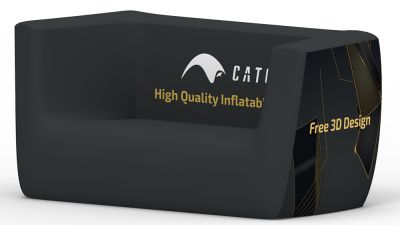
Premium Inflatable Double-Seat Sofa: Event Comfort, Custom Branding, and Factory-Direct Value

The Premium Inflatable Double-Seat Sofa is a practical and stylish seating solution for VIP lounges, exhibitions, trade shows, outdoor chill zones, and promotional events. Its spacious two-seat design creates an inviting place for guests to relax, connect, and enjoy a more comfortable event experience. With a modern appearance and air-sealed construction, the sofa operates without continuous blower noise or unnecessary power consumption, making it suitable for both indoor and outdoor commercial settings.

Designed for convenience, the sofa can be inflated quickly, deflated efficiently, and stored with minimal space. This makes it an excellent choice for rental companies, event organizers, exhibition contractors, and businesses that attend frequent brand activities. Durable materials and careful factory production help the seating maintain its appearance and performance through repeated use, while its lightweight structure supports easy transportation and flexible placement.

Custom branding and logo printing are available to turn the sofa into a visible promotional feature. Printed graphics can strengthen event presentation, improve brand recognition, and create a memorable visual point in busy venues. Sourced from experienced suppliers and factories in China, this double-seat inflatable sofa combines event comfort, reusable functionality, personalized presentation, and factory-direct value in one versatile product.

FAQS

Which fabric is suitable for an inflatable sport dome?

PVC-coated polyester balances strength, flexibility, cost, and service life. TPU-coated fabric feels flexible and clean, but repairs may cost more. Heavier fabric is not automatically better. Check tensile strength, tear resistance, flame performance, and UV-aging records.

What structural details should buyers inspect?

Confirm clear span, dome height, internal air pressure, anchoring, emergency exits, and backup blowers. Height should support lighting, ventilation, and ball movement. Reinforced seams around doors and corners need careful inspection. Small design errors become expensive later.

How can a dome handle different weather conditions?

Request rated wind speed, snow-load calculations, drainage plans, and operating temperatures. Raised foundations and gutters help prevent standing water. Insulation can reduce heating costs in cold regions. It may also complicate installation.

What safety systems should an inflatable dome include?

Check pressure monitors, alarms, emergency exits, internal lighting, and evacuation routes. Doors should open quickly from inside without special tools. Ask for measured stability after power loss. Hopeful estimates are not enough.

How important is the inflation equipment?

The main blower must maintain stable pressure during wind, rain, and frequent entry. Large venues should have a tested backup blower. Inspect filters, electrical protection, vibration, noise, and replacement-part access. Small faults can become major failures.

How can buyers verify a manufacturer’s quality?

Request factory videos, material specifications, sample panels, and recent project records. Inspect seams, coatings, anchors, doors, and blower systems. Certificates should show valid numbers, issuing organizations, scope, and expiration dates. Copied documents are a serious warning.

What information is needed for customization?

Provide court dimensions, entrance locations, ventilation needs, lighting plans, and local weather conditions. Confirm fabric thickness, insulation, emergency exits, and replacement parts in writing. Request a prototype drawing. Approve every revision, even the boring details.

What should buyers review after placing an order?

Review installation guidance, warranty terms, response times, and spare-parts policies. Request independent inspection before shipment. Inspect pressure stability, anchor tension, welds, and blower performance. I might overlook drainage too. That would be a costly mistake.

Conclusion

Choosing the best Inflatable Sport Dome from China begins with clearly defining its purpose, such as sports training, competitions, fitness activities, or temporary events. Consider the required capacity, court layout, ceiling height, available installation space, and dome shape. Material quality and structural design are also essential, especially when the dome must withstand wind, rain, temperature changes, and frequent use. A reliable design should include stable anchoring, efficient inflation equipment, ventilation, lighting compatibility, and safety features that support quick evacuation or emergency response.

Before placing an order, carefully evaluate the manufacturer’s production experience, quality control process, certifications, customization capabilities, and communication standards. Request detailed specifications, drawings, samples, and project references when possible. The total budget should include manufacturing, packaging, shipping, installation, maintenance, and potential replacement costs. Finally, confirm delivery schedules, warranty coverage, spare parts availability, technical guidance, and after-sales support to ensure the Inflatable Sport Dome remains safe, functional, and cost-effective throughout its service life.
Clara

Clara

Clara is a dedicated marketing professional with a deep understanding of her company’s core product offerings, which include inflatable tents, arches, columns, furniture, and aluminum frame folding tents. With a keen eye for detail and a passion for innovation, she actively contributes to the......
Previous 2026 Best Inflatable Tent Canopy for Global Buyers?